
Today I wrote about 15,000 signs of the belly soups of the Greeks and then I selected some older texts for my next book The Sarmale Collector. I've been awake since 12:00, so at 7:22 when this thought crossed my mind I also had the excuse of being tired. I have no excuse […]
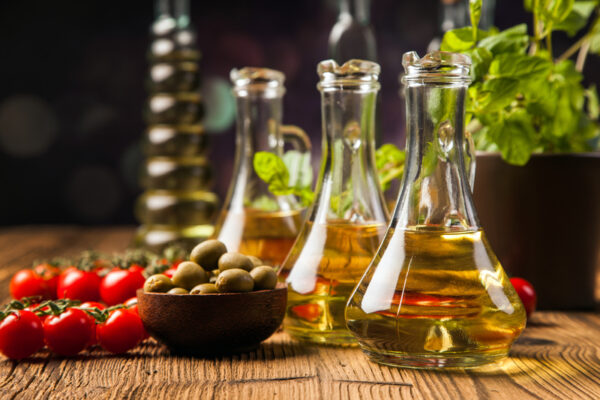
How to choose the right olive oil to buy on holiday in Greece. Ten tips from Cătălin Adam, the entrepreneur who created Eliada – the most awarded olive oil with a Romanian brand (P)
Hundreds of thousands of Romanians spend their holidays in Greece and most of them take the opportunity to return home with a few liters of olive oil from "their mother". But, as everywhere, not all olive oil is equally good, indeed, many times [...]
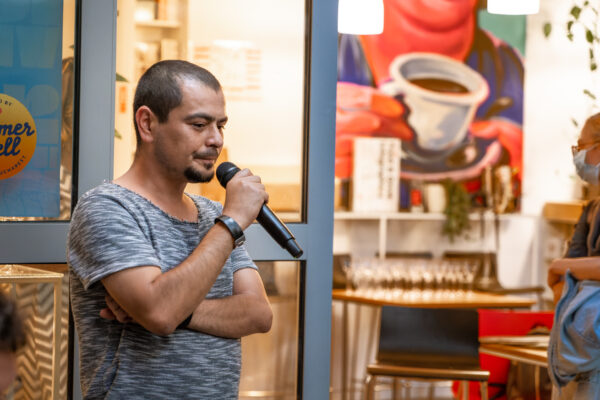
Companies can customize the cover of the upcoming book signed by culinary writer Cosmin Dragomir
Gastronomy journalist and writer Cosmin Dragomir announces that his next volume: The sarmale collector, which will appear in the fall of this year, can have a personalized cover for companies that want to buy the book to give as a gift to employees, customers or partners. The money obtained will be spent on the partial funding of culinary research projects [...]

Romanian gastronomic identity through zamuri - afterword to Mircea Groza's book
GastroArt and Cărturești.ro publishing house announces the start of the pre-order campaign for one of the most anticipated Romanian culinary books, the volume ZĂMURI - soups, soups and năcreli (Transylvanian recipes from the elderly) signed by master Mircea Groza. It is the first volume in an author's series dedicated to the researcher from Saláje, the publishing house announcing that they are already working on the second [...]

Cătălin Ștefănescu: "magic from the soup pot", foreword to Mircea Groza's volume
GastroArt and Cărturești.ro publishing house announces the start of the pre-order campaign for one of the most anticipated Romanian culinary books, the volume ZĂMURI - soups, soups and năcreli (Transylvanian recipes from the elderly) signed by master Mircea Groza. It is the first volume in an author's series dedicated to the researcher from Saláje, the publishing house announcing that they are already working on the second [...]

Master Mircea Groza releases his first book: a collection of 182 zamuri, Transylvanian recipes from the elders. You can pre-order it
GastroArt and Cărturești.ro publishing house announces the start of the pre-order campaign for one of the most anticipated Romanian culinary books, the volume ZĂMURI - soups, soups and năcreli (Transylvanian recipes from the elderly) signed by master Mircea Groza. It is the first volume in an author's series dedicated to the researcher from Saláje, the publishing house announcing that they are already working on the second [...]

Snipers and tomatoes, a story about Sarajevo
By definition exploration means looking for the new, but inevitably you try to identify common ground. Sarajevo is different. It's unlike anything you've seen before. Relatively close to Bucharest and yet different. It has neither the colors and verve of Mediterranean cities, nor the coldness and scratchiness of Western clouds, nor the bookstores and clubs of Belgrade, nor even the size of Bucharest. Both Vienna […]
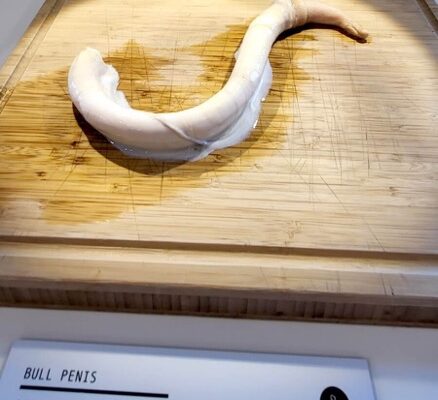
The alien in the plate (attacks again, that is, part two): how about some grubs, bugs, chubby bugs, ants, rotting shark?!?
If the idea of eating crickets disgusts you, DO NOT READ THIS TEXT! I promised a short follow-up to last time's newsletter, because it happened that, after I had set the theme, I ended up in Malmo - Sweden - at the Disgusting Food Museum and I experience some rather extreme tastes in perfect symbiosis with the previous theme: which […]

Aurora Liiceanu on the history of petit beurre biscuits
140 years ago, thinking back nostalgically to the days of his childhood, pastry chef Louis Lefèvre-Utile set out to create a product that resembled the tablecloth sewn by his grandmother. This is how the petit beurre biscuit appeared, which took the symbols of time from that napkin: the four "ears" represented the seasons, the 52 "teeth" […]

The Food That Divides Us: From Guinea Pig Last Supper to Medium Rare Bats
The history of "we are what we eat" begins in 1825, when, two months before the author's death, Physiologie du gout (Physiology of taste) appears. With this volume, Jean Anthelme Brillat-Savarin becomes, along with Alexandre -(Balthazard)-Laurent Grimod de La Reynière, the founder of the gastronomic essay genre. In the mentioned volume, Brillat-Savarin postulates: "Dis-moi ce que tu manges, je te dirai [...]
 English
  Romanian